
12
2026
If you have caught yourself running a finger across your cheek and noticing bumps, rough patches, or a dullness that no amount of moisturizer seems to fix, you are not imagining it. Skin texture changes gradually, and by the time it becomes noticeable, it usually has more than one cause behind it. Florida's sun, humidity, and year-round outdoor lifestyle all play a role, and Orlando residents in particular deal with a climate that speeds up a lot of these changes.
A chemical peel is one of the most researched and reliable ways to address rough texture, clogged pores, and an uneven tone, but it helps to understand what is actually happening under the surface before booking one. This guide walks through the common causes of textural skin concerns, how to know if a peel is the right next step, and what happens during a professional treatment.
What Causes Rough or Uneven Skin Texture?
Texture issues rarely come from a single source. A few of the most common contributors include the following.
Sun Exposure and Environmental Stress
Orlando sees more sun-drenched days than most of the country, and UV exposure breaks down collagen while thickening the outermost layer of skin. Over time, this creates a coarser, less even surface along with visible dullness.
Buildup of Dead Skin Cells
Skin naturally sheds cells on its own cycle, but that process slows with age, dehydration, and certain skincare habits. When dead cells sit on the surface too long, skin can look flaky, feel rough, and reflect light unevenly, which is why it often appears dull rather than radiant.
Clogged Pores and Congestion
Excess oil, sweat, and humidity, all of which Central Florida has in abundance, can mix with dead skin cells and settle into pores. This is one of the most common drivers of textural congestion and small, persistent bumps.
Scarring From Past Breakouts
Even mild acne can leave behind subtle texture changes once it heals. These marks are not always about color; they can also be shallow depressions or raised areas that catch the light differently than smooth skin.
If any of this sounds familiar, it is worth learning more about our texture and congestion concerns page or our dull skin concerns page, where we break down these issues in more detail.
How Do You Know If You Need a Chemical Peel?
A few signs tend to point toward a peel being a good fit:
- Your skin feels rough or bumpy even after a full skincare routine
- Makeup seems to sit unevenly or emphasize texture instead of smoothing it
- You notice a dull, tired look that persists regardless of sleep or hydration
- Over-the-counter exfoliants have stopped making a visible difference
- You have shallow acne marks or small textural scarring
If several of these apply, a professional evaluation is the next reasonable step, since at-home products are formulated to be gentle enough for daily use and often cannot reach the same depth as an in-studio treatment.
What Does a Chemical Peel Actually Do?
A chemical peel uses a controlled solution to remove the outermost, damaged layers of skin. This encourages the body to generate fresh, healthier cells in their place. Depending on the strength and formulation, a peel can:
- Smooth rough or bumpy texture
- Even out tone and reduce dullness
- Minimize the appearance of shallow acne marks
- Support a brighter, more refined-looking complexion
- Help other skincare products absorb more effectively afterward
At Moonlight Skin Studio, our Professional Corrective Peel and SkinBetter Peel are formulated to target these exact concerns, and each is customized to your skin's specific needs rather than applied as a one-size-fits-all treatment. You can see the full range of options under our chemical peels service category.
What Happens During a Professional Peel Appointment?
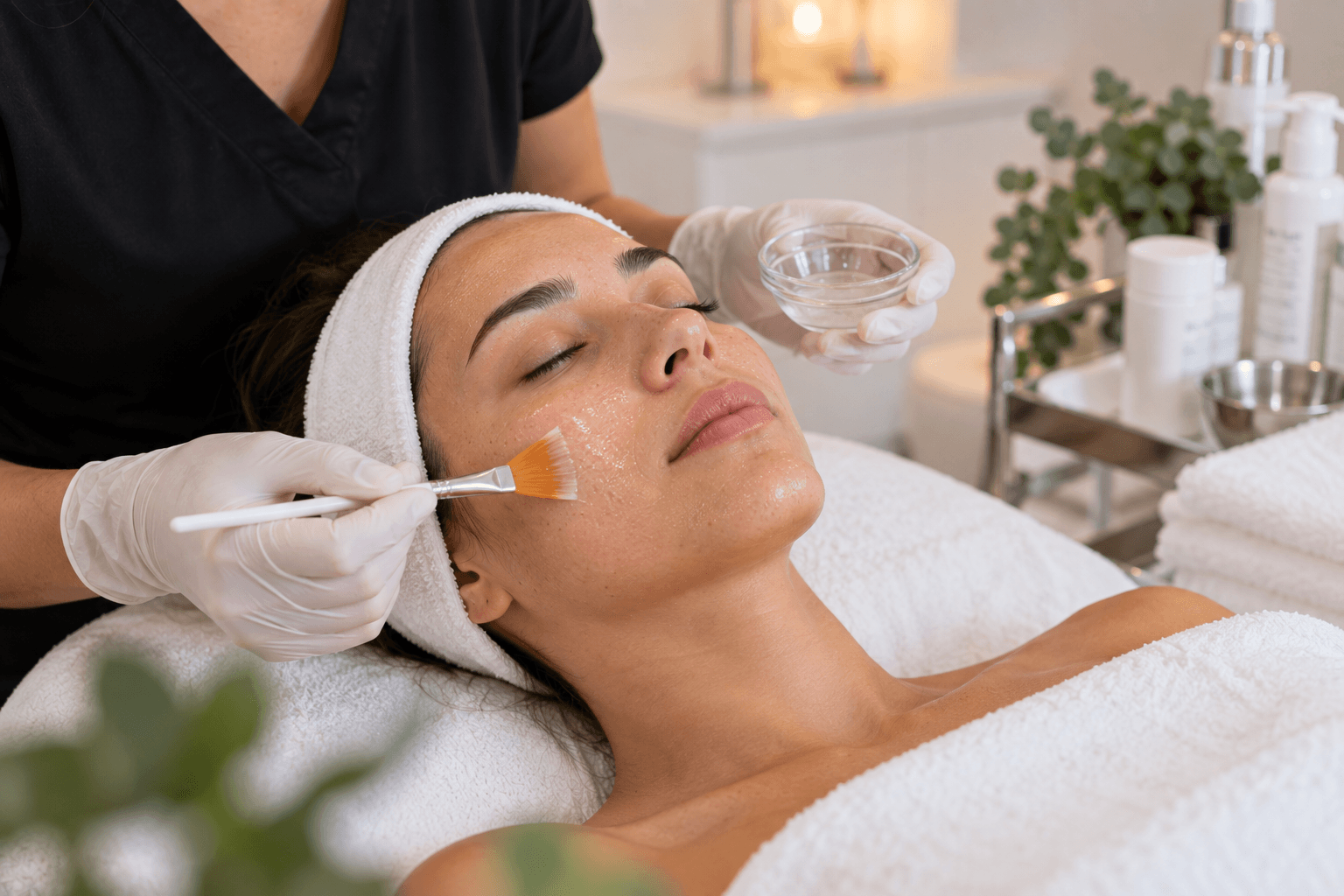
Every peel starts with a consultation, since not every skin type or concern calls for the same strength or ingredient combination. From there, your esthetician will cleanse the skin, apply the peel solution in a controlled manner, and monitor how your skin responds throughout the process.
Afterward, some mild redness or a warm sensation is normal, similar to a light sunburn, and typically fades within a day or two. Depending on the depth of the peel, visible flaking can occur over the following several days as the skin renews itself. Sun protection afterward is essential, which matters even more for anyone living in a sun-heavy environment like Orlando.
Are Chemical Peels Safe for All Skin Types?
This is one of the most common questions we hear, and the honest answer is that it depends on the individual. Peels are not one-size-fits-all, which is exactly why a consultation matters so much. Skin tone, sensitivity, current medications, and any active skin conditions all influence which peel formulation and strength are appropriate. A qualified esthetician will walk through your history before recommending a treatment plan, rather than defaulting to the strongest option available.
How Often Should You Get a Chemical Peel?
Most people see the best results from a series of peels rather than a single session, since skin renewal happens gradually. Many clients start with a treatment every four to six weeks, then shift to a maintenance schedule once their skin reaches its goal texture and tone. Your esthetician can build a timeline based on how your skin responds after the first appointment.
Chemical Peels Versus At-Home Exfoliants
At-home scrubs, acids, and exfoliating pads can help maintain results between professional visits, but they are formulated at lower strengths for safety reasons. A professional peel reaches deeper layers under controlled, monitored conditions, which is why it can produce more noticeable changes in texture and tone than home care alone. Think of at-home products as maintenance and professional peels as the reset that makes that maintenance more effective.
Frequently Asked Questions
Does a chemical peel hurt? Most clients describe a tingling or warming sensation rather than pain. Any discomfort is typically brief and manageable, and your esthetician will check in throughout the treatment.
How long is recovery after a chemical peel? Recovery time depends on the strength of the peel. Lighter peels may involve little to no visible downtime, while deeper treatments can cause flaking for several days. Your provider will walk you through exactly what to expect for your specific treatment.
Can a chemical peel help with acne scarring? Chemical peels can improve the appearance of shallow, surface-level texture changes from past breakouts. Deeper or more pronounced scarring may benefit from a broader treatment plan, which your esthetician can discuss during a consultation.
Is a chemical peel worth it for dull skin? Yes, dullness is one of the most common concerns a peel addresses, since removing built-up dead skin cells allows fresh, more reflective skin to surface.
How soon will I see results from a chemical peel? Some clients notice smoother texture within a few days as flaking resolves, while fuller results tend to build over a series of sessions as skin continues to renew itself.
Ready to Give Your Skin a Fresh Start?
Uneven texture and dullness are common, but they are not something you have to live with indefinitely. If your skin has been feeling rougher than you would like, a professional chemical peel at Moonlight Skin Studio may be exactly the reset it needs. We proudly serve clients throughout Orlando and Winter Park, Florida, and our team is happy to walk you through which peel fits your skin best.
Explore our full list of services or reach out to our team to schedule a consultation today.